
What is Social Media Marketing (SMM)?
Social Media Marketing (SMM) is the process of promoting a business, brand, product, or service through social media platforms such as Instagram, Facebook, LinkedIn, YouTube, and X. It helps businesses reach their target audience, increase brand awareness, build customer relationships, and drive website traffic. SMM involves creating engaging content, managing social media accounts, interacting with followers, running paid advertisements, and analyzing performance. A well-planned social media marketing strategy can help businesses attract new customers, strengthen their online presence, and achieve their marketing goals SMM also helps businesses understand their customers’ needs, interests, and preferences. It allows brands to share information about their products and services quickly and effectively. Businesses can use social media to promote special offers, discounts, new products, and upcoming events. Regular and consistent posting helps maintain a strong and active online presence. Social media platforms also provide valuable data about audience engagement and customer behavior. Businesses can use this data to improve their marketing strategies and create better content. Influencer marketing is another important part of social media marketing that helps brands reach a wider audience. Customer reviews, comments, and messages help businesses build trust and credibility.
Importance of Social Media Marketing
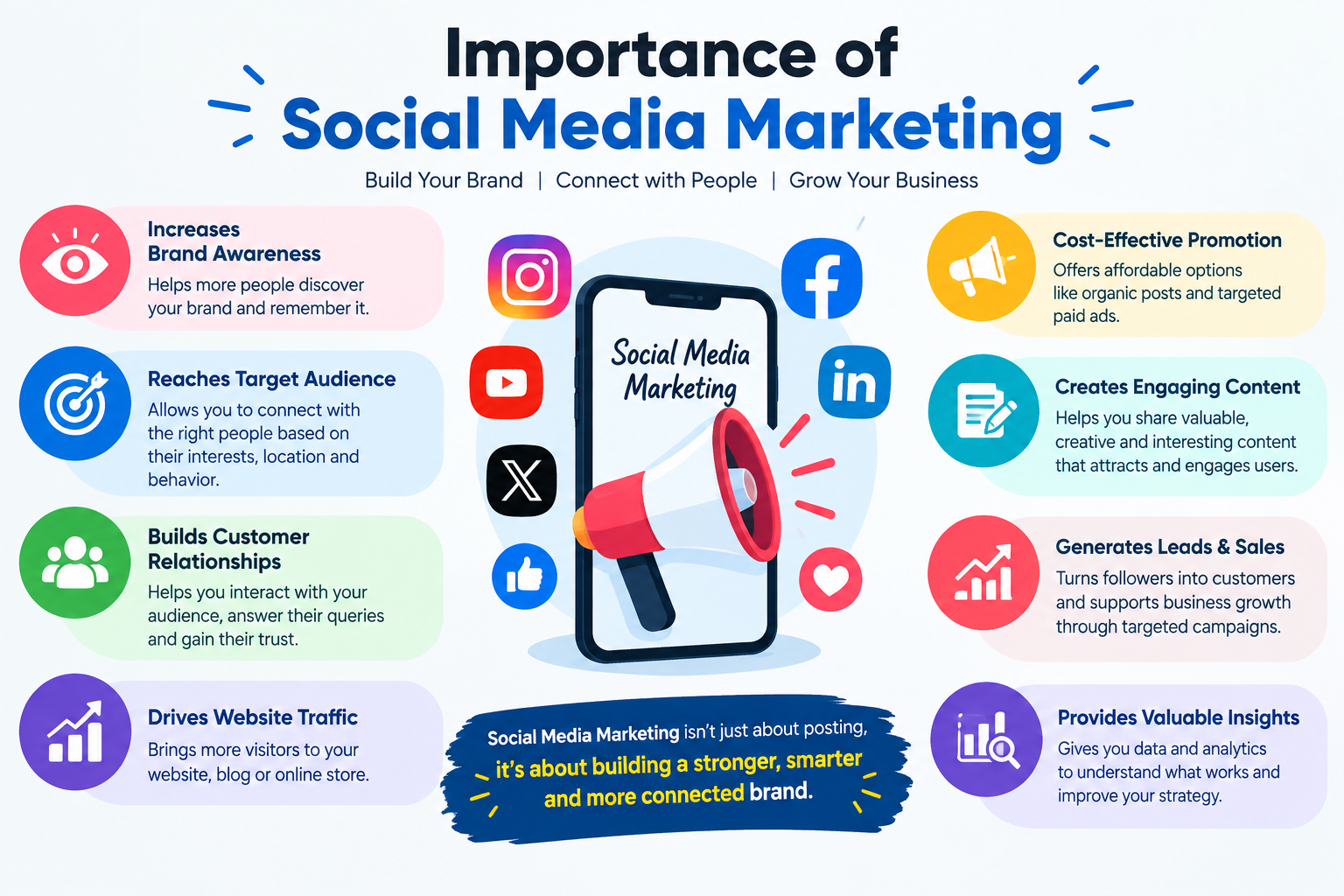
Social Media Marketing (SMM) is important for businesses because it helps them reach a large number of people quickly and effectively. Platforms like Facebook, Instagram, LinkedIn, YouTube, and X allow businesses to promote their products and services, increase brand awareness, and connect with their target audience. SMM also helps businesses build strong relationships with customers through regular interaction, comments, messages, and engaging content.Another important benefit of SMM is that it can increase website traffic, generate leads, and support business growth. Businesses can use social media advertising to reach specific audiences based on their interests, location, age, and behavior. This makes marketing more targeted and helps businesses reach potential customers who are more likely to be interested in their products or services.SMM also plays an important role in building brand credibility and trust. By regularly sharing useful, informative, and engaging content, businesses can create a positive image among their audience. Customer reviews, testimonials, comments, and social media interactions can also help build trust and encourage new customers to choose the brand.
Benefits of Social Media Marketing
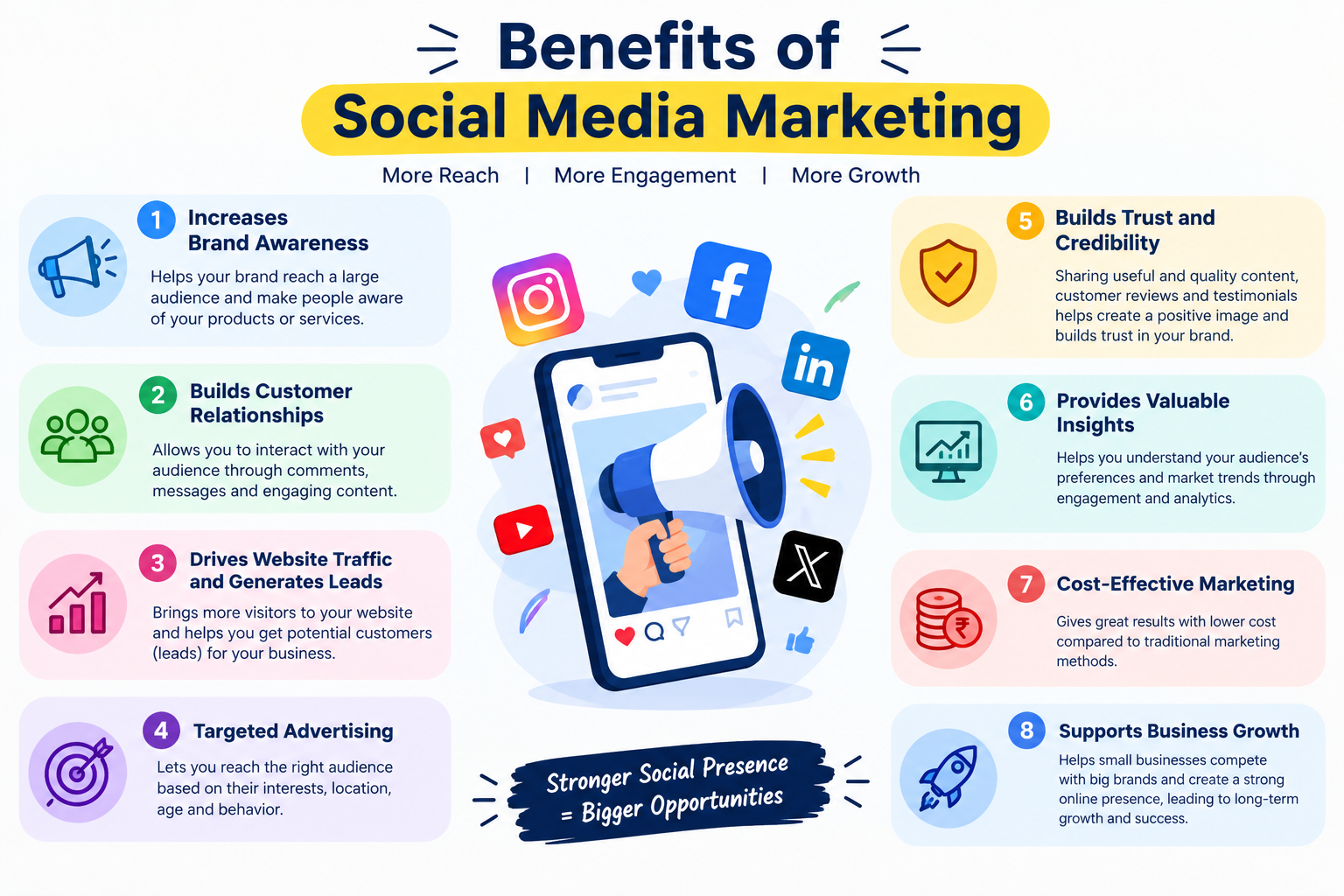
(1).Increases Brand Awareness – Helps businesses reach more people and make their brand recognizable.
(2).Reaches Target Audience – Businesses can connect with specific audiences based on age, location, interests, and behavior.
(3).Builds Customer Relationships – Social media allows businesses to communicate directly with customers through comments, messages, and posts.
(4).Generates Leads – SMM helps attract potential customers and convert them into leads.
(5).Drives Website Traffic – Social media posts and advertisements can bring more visitors to a business website.
(6).Builds Trust and Credibility – Regular and useful content, reviews, and customer interactions help create trust in the brand.
(7).Cost-Effective Marketing – Social media provides affordable options for promoting products and services compared with many traditional marketing methods.
Grow of Top Social Media Platform


What is Marketing?
Marketing is the process of promoting products, services, or a brand to the right audience. It helps businesses attract potential customers, build brand awareness, create trust, and increase sales. Marketing includes activities such as advertising, social media marketing, content marketing, email marketing, search engine optimization (SEO), and digital advertising.A successful marketing strategy begins with understanding the target audience, their needs, interests, and buying behavior. Businesses use different marketing channels to communicate with customers and present their products or services effectively. Marketing also helps companies understand market trends and stay competitive in their industry.Digital marketing has made it easier for businesses to reach customers through websites, search engines, social media platforms, emails, and online advertisements. By creating valuable and engaging content, businesses can connect with their audience and build long-term relationships.Marketing is not only about selling products; it is also about creating a strong brand identity and delivering value to customers. With the right strategy, businesses can improve their online visibility, generate quality leads, increase customer engagement, and support long-term business growth.
There are Two Types Of Marketing
Traditional Marketing
Digital Marketing
Traditional Marketing is a method of promoting products or services using offline channels. It is one of the oldest forms of marketing and helps businesses reach customers through media that does not primarily depend on the internet.Traditional marketing includes television advertisements, newspapers, radio, magazines, billboards, posters, brochures, flyers, banners, and direct mail. Businesses use these methods to create brand awareness, promote their products, and communicate offers to potential customers.One major benefit of traditional marketing is that it can reach a large local audience, especially through television, radio, newspapers, and outdoor advertising. It is commonly used by businesses that want to build strong brand recognition in a specific area or among a broad audience.
Digital Marketing is the process of promoting products, services, or brands through digital channels such as search engines, social media, websites, email, and online advertising. It helps businesses connect with their target audience, build brand awareness, generate leads, and increase sales.Digital marketing includes several important methods such as Search Engine Optimization (SEO), Social Media Marketing (SMM), Google Ads, Content Marketing, Email Marketing, and Web Marketing. Businesses can use these strategies to reach the right audience based on factors such as interests, location, behavior, and online activity.One major advantage of digital marketing is that businesses can measure their results, including website traffic, engagement, leads, conversions, and advertising performance.
Social media marketing strategy
A well-planned Social Media Marketing Strategy helps businesses connect with their target audience, increase brand awareness, drive engagement, and generate quality leads. At [Your Company Name], we develop customized social media strategies designed to align with your business goals, target audience, and industry requirements.
Our approach combines audience research, engaging content, platform optimization, data-driven decisions, and performance tracking to help your brand grow across social media platforms.
Social Media Marketing Strategy is a structured plan that defines how a business uses social media platforms to achieve its marketing objectives. It includes selecting the right platforms, understanding the target audience, planning content, creating campaigns, and measuring performance.A successful strategy ensures that every social media activity has a clear purpose and contributes to your overall business growth.
[Our Social Media Marketing Strategy Services]
1. Target Audience
ResearchUnderstanding your audience is the foundation of an effective social media strategy. We research your ideal customers, interests, demographics, online behavior, and preferences to develop content and campaigns that resonate with the right people.
2. Social Media Platform Selection
Every social media platform serves a different purpose. We identify the most suitable platforms for your business based on your goals and audience.Instagram: Visual branding, Reels, and audience engagement.Facebook: Community building, brand awareness, and advertising.LinkedIn: B2B marketing, professional networking, and lead generation.YouTube: Video marketing, educational content, and brand visibility.Pinterest: Visual discovery, inspiration, and website traffic.
3. Competitor Analysis
We analyze your competitors' social media presence to identify content trends, engagement opportunities, audience interests, and areas where your brand can stand out.This research helps us develop a unique marketing approach that differentiates your business from competitors.
4. Content Planning and Strategy
Consistent and valuable content is essential for social media growth. We create a content strategy that balances promotional, educational, entertaining, and engaging posts.Our content planning may include:Educational posts and industry tips.Reels, short videos, and creative graphics.Product and service promotions.Customer testimonials and success stories.Interactive polls, questions, and stories.Seasonal campaigns and trending topics.
5. Social Media Content Calendar
A content calendar helps maintain consistency and organize social media activities. We plan what to publish, when to publish it, and which platform to use.This structured approach ensures that your content remains relevant, organized, and aligned with your marketing objectives.
6. Brand Positioning and Messaging
A recognizable brand builds trust and credibility. We help establish a consistent brand voice, visual identity, messaging style, and communication approach across your social media channels.Our goal is to make your brand recognizable and memorable to your target audience.
7. Organic Growth and Audience Engagement
Organic social media marketing focuses on building an authentic audience without relying entirely on paid advertising.We develop strategies to improve reach, encourage meaningful conversations, strengthen community relationships, and increase engagement through relevant content and consistent interaction.
8. Paid Social Media Campaign Strategy
Paid advertising can help businesses reach specific audiences and achieve measurable marketing objectives. We plan social media advertising campaigns based on your goals, audience, and budget.Our campaign strategies may focus on brand awareness, website traffic, lead generation, product promotion, or conversions.
9. Social Media SEO and Profile Optimization
An optimized social media profile helps users understand your business and find relevant information easily. We improve profile descriptions, business information, relevant keywords, links, and calls to action where appropriate.We also use relevant content topics and platform-specific discovery practices to improve your brand's visibility.
10. Performance Tracking and Analytics
Measuring results helps determine which strategies are working and where improvements are needed. We monitor relevant performance indicators and use the findings to refine future campaigns.